Introduction
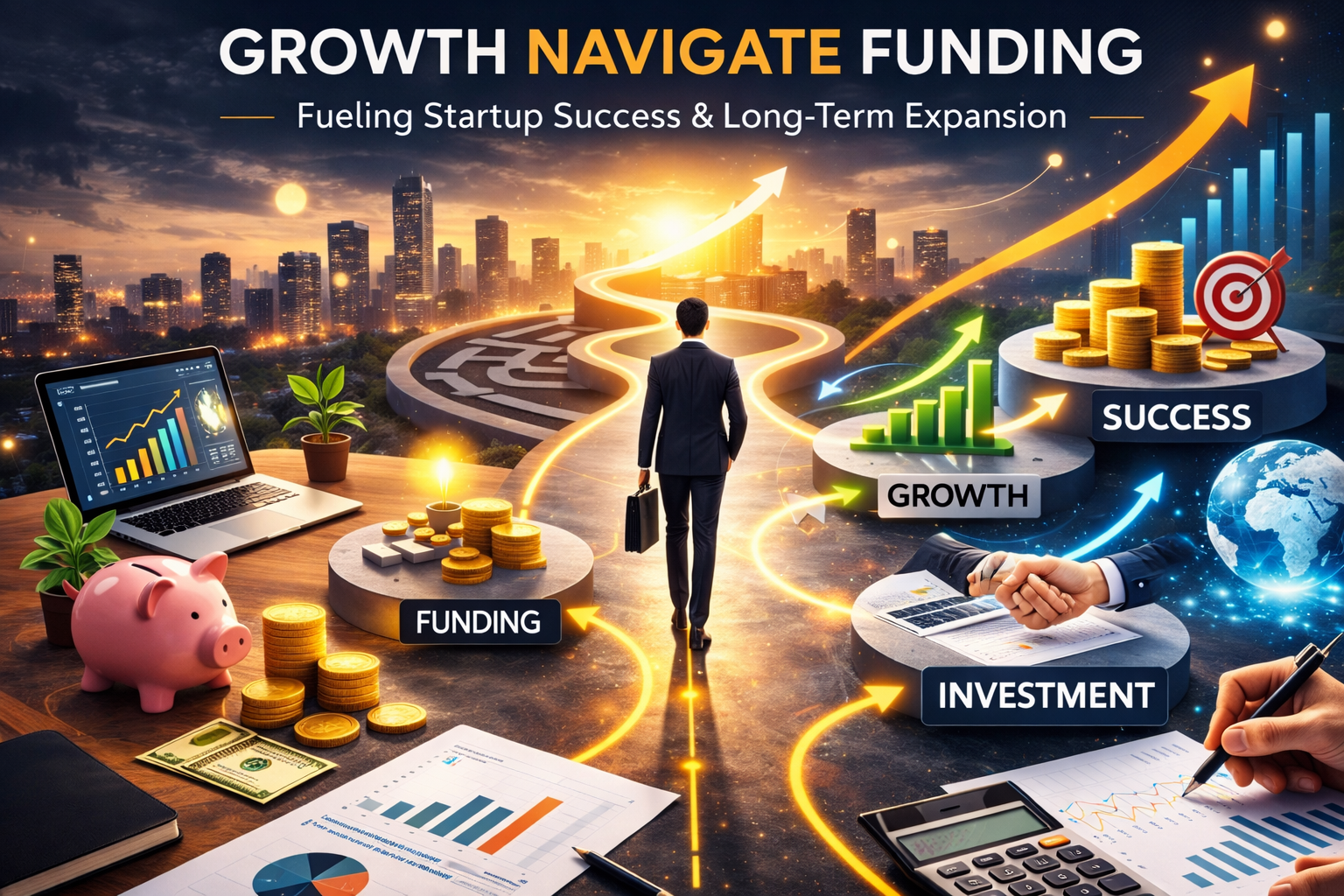
Growth navigate funding is a structured, deliberate approach to securing and managing capital specifically for business expansion. It focuses on aligning funding decisions with clearly defined growth objectives, realistic financial capacity, and long-term scalability. Instead of raising capital reactively, organizations using growth navigate funding assess their readiness, choose suitable funding sources, and structure capital in ways that protect operational stability and long-term performance.
For founders, executives, and financial decision-makers, this approach emphasizes discipline and strategic alignment. It connects forecasting, risk management, compliance, and investor communication into a single, coordinated process. When executed effectively, growth navigate funding can strengthen valuation, support sustainable expansion, and reduce the financial pressure that often accompanies rapid growth.
This guide is designed for startups, scaling businesses, and established companies that want to raise capital responsibly while maintaining control, financial clarity, and operational flexibility.
What Is Growth Navigate Funding?
Growth navigate funding refers to a structured approach to securing and managing capital specifically for business expansion.
-
Focuses on aligning the funding type with the company’s growth stage
-
Combines strategic planning, capital management, and risk mitigation
-
Prioritizes scalability and long-term sustainability
-
Integrates financial forecasting with operational planning
Rather than focusing only on raising money, this approach emphasizes how capital is selected, structured, and managed over time to support predictable growth.
Definition and Core Concept
At its core, growth navigate funding is the strategic coordination of funding sources to support measurable business growth.
-
Identifies capital needs tied directly to expansion goals
-
Matches funding structures to cash flow capacity
-
Protects ownership and decision-making control where possible
-
Aligns funding timelines with defined growth milestones
The central principle is disciplined capital deployment, not opportunistic borrowing.
There’s plenty more to explore check out our other posts!
Is Growth Navigate Funding a Company or a Funding Strategy?
Growth navigate funding can refer to either a branded advisory offering or a broader funding strategy framework.
-
As a strategy, it represents a method for planning and securing growth capital
-
As a service, it involves advisory support focused on funding readiness and structuring
-
In practice, it is often a combination of strategic guidance and execution support
The meaning depends on context, but the strategic focus remains on navigating funding in a structured and informed way.
How It Differs from Traditional Business Financing
This approach differs from traditional financing by emphasizing scalability and capital efficiency rather than short-term liquidity.
-
Traditional financing often addresses immediate cash shortfalls
-
Growth-oriented funding supports planned expansion initiatives
-
Greater emphasis is placed on investor alignment and valuation impact
-
Financial modeling and risk planning are integrated from the start
The key distinction lies in intent: accelerating sustainable growth rather than covering operational gaps.
Who Needs Growth-Focused Funding?
Organizations pursuing expansion, market entry, or scale typically require structured growth funding.
-
Companies increasing production capacity
-
Firms entering new geographic or customer markets
-
Businesses investing in technology, systems, or acquisitions
This type of funding becomes relevant when growth demands exceed what retained earnings can support.
Startups in Early-Stage Growth
Early-stage startups often require capital to move from product validation to revenue scaling.
-
Hiring essential team members
-
Expanding marketing and customer acquisition
-
Building operational infrastructure
-
Extending runway before reaching profitability
For example, a product-led startup with early traction may struggle to scale customer acquisition without additional capital, even if demand is validated.
Scaling SMEs and Expansion-Ready Businesses
Small and mid-sized enterprises typically need capital to scale beyond organic growth.
-
Opening additional locations
-
Investing in automation or enterprise systems
-
Expanding distribution channels
-
Increasing inventory or production capacity
Well-structured funding allows these businesses to grow without disrupting daily operations or cash flow stability.
Established Companies Entering New Markets
Established organizations may require capital for larger strategic initiatives.
-
International market entry
-
Mergers and acquisitions
-
Product diversification
-
Meeting regulatory requirements in new regions
Structured funding reduces financial exposure during complex expansion phases.
How Growth Navigate Funding Works
Growth navigate funding operates through assessment, selection, structuring, and disciplined capital management.
-
Evaluate growth objectives
-
Estimate capital requirements
-
Select appropriate funding types
-
Manage capital performance over time
Each phase depends on financial clarity, realistic assumptions, and proactive risk control.
Assessing Business Growth Readiness
Growth readiness depends on financial stability, market demand, and operational capacity.
-
Positive or improving cash flow trends
-
Validated product–market fit
-
Clearly defined expansion strategy
-
Reliable and consistent financial reporting
In practice, businesses that raise capital without these foundations often experience increased pressure instead of accelerated growth.
Identifying the Right Funding Sources
The optimal funding source depends on risk profile, ownership goals, and repayment capacity.
-
Equity for high-growth, higher-risk models
-
Debt for businesses with stable and predictable revenues
-
Grants for innovation-driven or public-interest initiatives
-
Hybrid models to balance flexibility and long-term cost
Funding source selection directly affects control, cost of capital, and future fundraising options.
Structuring Capital for Sustainable Expansion
Capital should be structured to protect liquidity and operational flexibility.
-
Align repayment terms with revenue cycles
-
Avoid excessive leverage
-
Negotiate valuation with long-term impact in mind
-
Define clear performance and reporting milestones
Thoughtful structuring reduces refinancing risk and preserves strategic flexibility.
Managing Investor or Lender Relationships
Ongoing relationship management supports transparency and alignment.
-
Provide regular financial and performance updates
-
Report key metrics consistently
-
Address performance issues early
-
Maintain documented governance processes
Clear communication helps protect credibility and long-term trust.
Types of Funding Used for Business Growth
Growth capital may come from equity, debt, public programs, or hybrid structures.
-
Each option carries different cost and control implications
-
Selection depends on company stage and risk tolerance
-
Terms should align with expected returns and cash flow patterns
There is no single best option for every business.
Equity Financing (Angel, VC, Private Equity)
Equity financing involves exchanging ownership for capital.
-
No immediate repayment obligation
-
Investors typically expect higher long-term returns
-
Governance or board rights are often included
-
Founder ownership is diluted
This model suits businesses with scalable growth potential and long-term value creation plans.
Debt Financing and Revenue-Based Funding
Debt financing requires repayment with interest.
-
Preserves ownership
-
Requires predictable cash flow
-
May include restrictive covenants
Revenue-based funding links repayment to a percentage of revenue, making it suitable for businesses with consistent income but limited appetite for dilution.
Grants and Government-Backed Programs
Grants provide non-dilutive funding under specific eligibility criteria.
-
No repayment required
-
Strict compliance and reporting obligations
-
Often industry-specific or impact-focused
-
Competitive application processes
These programs are particularly useful for research, innovation, and socially driven initiatives.
Alternative and Hybrid Funding Models
Hybrid structures combine features of both debt and equity.
-
Convertible notes
-
SAFE agreements
-
Mezzanine financing
-
Strategic partnerships
These models offer flexibility while balancing investor incentives.
The Growth Funding Process Step-by-Step
The growth funding process includes preparation, pitching, diligence, and execution.
-
Financial planning
-
Investor outreach
-
Negotiation
-
Post-funding monitoring
Each step requires documentation, transparency, and strategic clarity.
Financial Preparation and Forecasting
Preparation begins with realistic financial modeling.
-
Develop 3–5 year projections
-
Model best- and worst-case scenarios
-
Identify break-even points
-
Define capital allocation plans
Accurate forecasts improve negotiation outcomes and investor confidence.
Building a Strong Pitch and Data Room
A clear pitch and organized documentation are essential.
-
Concise business model explanation
-
Verified financial statements
-
Market and competitive analysis
-
Legal and compliance records
Transparency helps streamline due diligence.
Due Diligence and Negotiation
Due diligence validates assumptions and assesses risk.
-
Financial audits
-
Legal reviews
-
Operational assessments
-
Term sheet negotiations
Negotiations should focus on valuation, governance rights, and exit considerations.
Post-Funding Execution and Reporting
Execution determines whether capital delivers results.
-
Deploy funds according to plan
-
Track KPIs on a monthly basis
-
Report consistently to stakeholders
-
Adjust strategy if performance changes
Discipline after funding is critical for long-term success.
Key Roles in Navigating Growth Funding
Successful funding navigation relies on coordinated leadership and advisory roles.
-
Strategic direction
-
Financial oversight
-
Stakeholder communication
Clear role definition prevents operational confusion.
Founders and Executive Leadership
Leadership defines growth vision and funding strategy.
-
Set capital objectives
-
Approve funding structures
-
Lead investor negotiations
-
Maintain accountability
Leadership credibility directly influences funding outcomes.
Financial Advisors and Consultants
Advisors provide technical expertise and risk guidance.
-
Build and validate financial models
-
Review valuation assumptions
-
Identify appropriate funding options
-
Support compliance documentation
Their involvement reduces structural and regulatory risks.
Investors, Lenders, and Stakeholders
Capital providers assess risk and expected returns.
-
Conduct financial analysis
-
Monitor performance
-
Enforce contractual terms
-
Provide strategic input
Alignment improves long-term outcomes.
Why Strategic Funding Navigation Matters
Strategic funding navigation protects valuation, liquidity, and scalability.
-
Prevents over-leveraging
-
Maintains investor confidence
-
Aligns capital decisions with long-term goals
Poor funding decisions increase financial risk and limit flexibility.
Impact on Business Valuation
Funding decisions directly influence ownership and perceived market value.
-
Excessive dilution reduces founder control
-
Strong financial planning supports higher valuations
-
Clear growth metrics improve investor confidence
Valuation outcomes affect future fundraising rounds.
Risk Management and Cash Flow Stability
Structured funding supports predictable cash flow.
-
Align repayment schedules with revenue
-
Maintain emergency reserves
-
Monitor leverage and debt ratios
-
Avoid short-term funding gaps
Liquidity discipline reduces operational stress.
Long-Term Scalability and Market Positioning
Well-structured capital strengthens competitive positioning.
-
Enables strategic investments
-
Supports talent acquisition
-
Funds innovation initiatives
-
Builds operational capacity
Scalability depends on disciplined capital use.
Benefits of Growth Navigate Funding for Different Stakeholders
Structured funding creates measurable value across the organization.
-
Aligns capital with strategy
-
Improves transparency
-
Reduces financial uncertainty
Benefits differ by role.
Benefits for Founders and Owners
Founders gain access to capital with structured oversight.
-
Faster expansion
-
Clear financial roadmap
-
Managed dilution
-
Improved governance
Proper structuring helps preserve long-term control.
Benefits for Investors
Investors benefit from structured risk assessment and monitoring.
-
Transparent reporting
-
Defined exit strategies
-
Measurable performance metrics
-
Controlled exposure
Clarity reduces uncertainty.
Benefits for Employees and Teams
Employees benefit from stability and resource availability.
-
Improved job security
-
Expanded career opportunities
-
Investment in tools and systems
-
Clear strategic direction
Stability supports productivity and morale.
Compliance, Legal, and Regulatory Considerations
Funding arrangements must comply with applicable financial and corporate regulations.
-
Securities laws
-
Contract law
-
Reporting standards
-
Governance obligations
Non-compliance can result in penalties or legal disputes.
Securities and Equity Regulations
Equity offerings must follow relevant securities requirements.
-
Investor eligibility rules
-
Disclosure obligations
-
Shareholder agreements
-
Registration exemptions
Legal review is essential before issuing equity.
Loan Agreements and Financial Covenants
Loan agreements impose repayment and performance conditions.
-
Interest terms
-
Debt service coverage ratios
-
Restrictive covenants
-
Default clauses
Covenant breaches can trigger penalties or renegotiation.
Reporting and Governance Requirements
Funded organizations must maintain structured reporting.
-
Periodic financial statements
-
Board oversight
-
Audit requirements
-
Shareholder communications
Governance transparency builds trust.
Common Mistakes When Navigating Growth Funding
Most funding mistakes stem from weak planning or unrealistic expectations.
-
Poor financial controls
-
Overconfidence in valuation
-
Ignoring contractual obligations
These issues increase financial risk.
Overvaluing or Undervaluing the Business
Incorrect valuation distorts outcomes.
-
Overvaluation discourages investors
-
Undervaluation leads to excessive dilution
-
Lack of comparable benchmarks
-
Weak financial modeling
Balanced valuation supports effective negotiations.
Misaligned Investor Expectations
Misalignment often creates long-term friction.
-
Different risk tolerances
-
Conflicting exit timelines
-
Governance disputes
-
Communication breakdowns
Expectations should be aligned before closing funding.
Poor Financial Planning and Burn Rate Mismanagement
Uncontrolled spending shortens runway.
-
Excessive hiring
-
Unplanned marketing expansion
-
Weak cost monitoring
-
Lack of contingency planning
Burn-rate discipline supports operational stability.
Tools and Systems for Managing Growth Capital
Technology improves financial oversight and investor reporting.
-
Financial modeling software
-
Investor CRM systems
-
Performance dashboards
The right tools support structured capital management.
Financial Modeling and Forecasting Tools
Modeling tools improve accuracy and scenario planning.
-
Multi-year revenue projections
-
Cash flow simulations
-
Sensitivity analysis
-
Budget tracking
Accurate models support informed decisions.
Investor Relationship Management Platforms
These platforms centralize communication and reporting.
-
Secure document sharing
-
Automated updates
-
Cap table management
-
Compliance tracking
Centralization reduces administrative risk.
KPI Tracking and Performance Dashboards
Dashboards provide real-time visibility into performance.
-
Revenue growth rates
-
Customer acquisition cost
-
Gross margin
-
Runway and burn rate
Timely data enables faster corrective action.
Growth Navigate Funding vs Other Funding Strategies
Growth-focused funding differs in both structure and intent.
-
Designed for expansion
-
Aligns capital with long-term strategy
-
Emphasizes sustainable impact
Other approaches often prioritize short-term needs.
Growth Funding vs Bootstrapping
Bootstrapping relies on internal cash flow.
-
No dilution
-
Slower growth
-
Limited scalability
-
Minimal external oversight
Growth funding accelerates expansion while adding accountability.
Growth Funding vs Traditional Bank Loans
Bank loans emphasize repayment capacity.
-
Fixed interest obligations
-
Strict credit assessments
-
Limited flexibility
-
No ownership dilution
Growth funding may include more adaptable structures.
Equity vs Debt: Which Is Better for Scaling?
The better option depends on revenue stability and control preferences.
-
Equity reduces repayment pressure
-
Debt preserves ownership
-
Hybrid models balance both
Decisions should be based on detailed cash flow analysis.
Growth Navigate Funding Checklist for Business Leaders
A structured checklist improves readiness and execution.
-
Assess growth plans
-
Confirm financial clarity
-
Evaluate risk exposure
Preparation reduces funding delays.
Pre-Funding Readiness Checklist
Readiness requires operational and financial discipline.
-
Audited financial statements
-
Clear expansion strategy
-
Defined capital requirements
-
Documented governance structure
Incomplete preparation weakens negotiations.
Funding Evaluation Criteria
Funding should be evaluated beyond the headline amount.
-
Total cost of capital
-
Control implications
-
Repayment structure
-
Strategic alignment
The lowest-cost option is not always the best choice.
Post-Funding Performance Checklist
Ongoing monitoring ensures accountability.
-
Monthly KPI reviews
-
Budget adherence
-
Investor reporting schedules
-
Risk mitigation reviews
Consistent discipline protects long-term value.
Want to learn more? Our full collection of posts is ready for you!
Final Thoughts on Growth Navigate Funding
Growth navigate funding is most effective when capital decisions are made with clarity, structure, and long-term intent. Businesses that align funding strategy with operational readiness, financial discipline, and realistic growth objectives are better positioned to scale sustainably while preserving control and flexibility.
FAQs
What is growth-focused funding in business expansion?
Growth-focused funding is capital raised to scale operations, enter new markets, hire talent, or invest in infrastructure. It is structured around long-term expansion objectives rather than short-term cash flow gaps.
How is growth navigate funding different from traditional financing?
It aligns capital strategy with expansion planning, valuation impact, and risk management, focusing on scalability instead of covering operating expenses.
What are the main risks of taking growth capital?
Key risks include ownership dilution, restrictive covenants, unrealistic growth projections, and cash flow pressure.
When should a company consider raising growth capital?
A company should consider raising capital after validating demand, establishing reliable financial reporting, and defining a clear expansion plan.
Does growth funding always require giving up equity?
No. Growth funding may involve debt, revenue-based models, grants, or hybrid structures depending on revenue stability and control preferences.