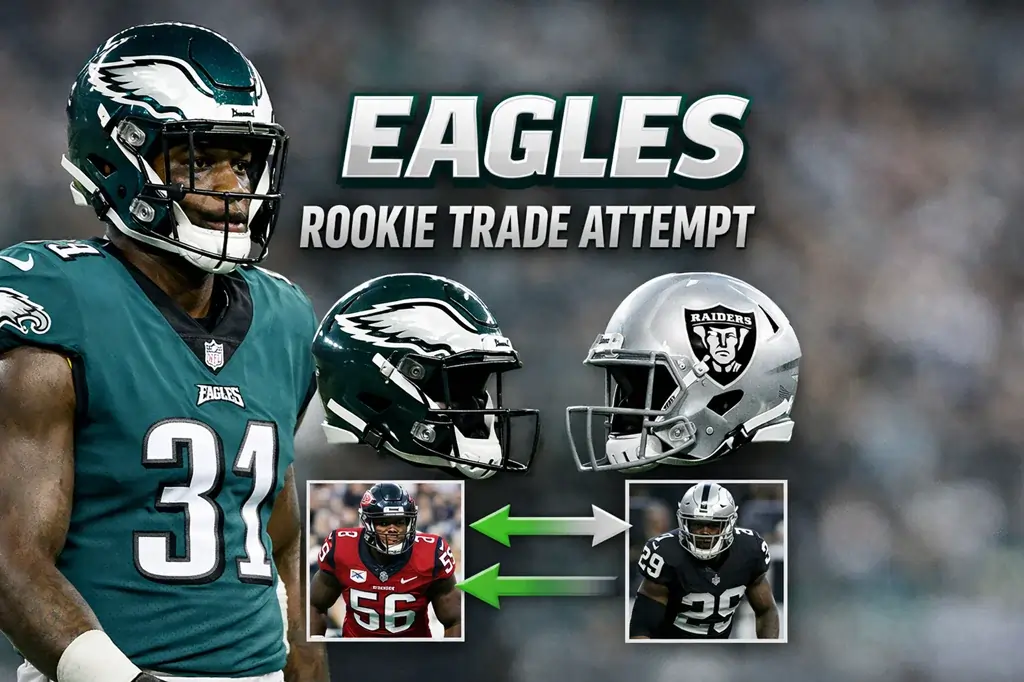
The Eagles rookie trade attempt became a key discussion point during draft season, reflecting Philadelphia’s strategic flexibility in pursuing specific prospects. The team evaluated roster gaps, draft tiers, and long-term planning before considering trades, showing calculated decision-making rather than reactionary moves.
At its core, the Eagles rookie trade attempt represented a deliberate effort to balance immediate roster needs with future draft assets. While the trade did not materialize, it offered insights into the team’s priorities, decision-making process, and approach to risk management in a highly competitive draft environment.
Table of Contents
ToggleWhat Was the Eagles Rookie Trade Attempt?
The Eagles rookie trade attempt referred to a reported effort by Philadelphia to move draft picks or newly selected players to acquire a particular rookie prospect.
Key points:
-
Discussions centered on draft positioning and roster construction, including potential mid-round swaps.
-
Evaluated whether to trade up or exchange assets, considering comparable team offers.
-
Focused on targeted roster improvement rather than reactionary moves.
-
While the trade did not finalize, it revealed the organization’s strategic priorities.
Definition of a Rookie Trade Attempt in the NFL
A rookie trade attempt occurs when a team tries to acquire or move a first-year player or draft position related to a rookie prospect.
-
May involve trading up in draft order or mid-round adjustments.
-
Could include exchanging an already-selected rookie.
-
Driven by positional needs and prospect evaluations, such as defensive or offensive priorities.
-
Decisions are calculated, weighing contract value, draft cost, and roster fit before acting.
Which Rookie or Draft Asset Was Involved?
Reports suggest the focus was on draft positioning rather than an established rookie starter.
-
Discussions involved mid-to-early round draft capital, often in the second or third round.
-
The goal was access to a targeted prospect with high athletic potential and positional fit.
-
No finalized rookie-for-rookie swap occurred.
-
This was a strategic trade-up attempt, not an attempt to offload a player.
Timeline of the Trade Discussions
Trade discussions reportedly took place during both the pre-draft and draft-day periods.
-
Internal evaluations began weeks before the draft, including scouting and analytics meetings.
-
Negotiations with other teams intensified hours before selections.
-
Opportunities closed once the targeted pick range passed.
-
Draft timing is crucial; leverage shifts immediately once a pick is made.
Why Did the Eagles Attempt the Rookie Trade?
The trade attempt was guided by roster optimization and long-term competitiveness.
-
Addressed identified positional gaps, including defensive line and secondary depth.
-
Targeted a high-upside rookie with measurable speed and versatility.
-
Evaluated cost versus benefit of moving up.
-
Reflected structured planning rather than panic-driven decisions.
Roster Needs and Positional Priorities
The Eagles sought reinforcement in positions with depth concerns or aging starters:
-
Defensive front rotation sustainability.
-
Secondary depth volatility.
-
Upcoming contract expirations of veteran players.
-
Teams often act preemptively to avoid visible weaknesses during the season.
Draft Board Strategy and Targeted Prospects
Philadelphia likely used a tier-based draft board approach:
-
Prospects grouped by grade tiers.
-
Identified drop-off points between tiers.
-
Trade-ups considered to secure top-tier players.
-
When a prospect sits alone in a tier, teams often become aggressive to secure the player.
Front Office Philosophy Under Current Leadership
The Eagles’ current leadership emphasizes calculated aggression:
-
Willingness to trade up if value aligns with team needs.
-
Heavy reliance on scouting, analytics, and performance metrics.
-
Avoidance of overpayment while maintaining roster flexibility.
-
This approach has been consistent in recent draft cycles.
How NFL Rookie Trades and Trade-Ups Work
Rookie trades are governed by draft capital valuation models and salary cap constraints.
-
Teams assign numeric values to each draft pick and compare with league trade charts.
-
Compensation is negotiated to ensure value equivalence and maintain future flexibility.
-
Trades require league approval.
-
Speed and clarity are critical during draft windows.
Trade-Up vs. Player-for-Player Rookie Deals
-
Trade-up: Moving higher in the draft order, usually exchanging future or mid-round picks.
-
Rookie swap: Exchanging roster assets, typically post-draft.
-
Trade-ups are more common; most teams prefer draft control over early player turnover.
Draft Pick Compensation and Value Charts
-
Standardized charts help price draft picks accurately.
-
Each pick has a numeric value; exchanges aim for equivalence.
-
Future picks are slightly discounted to reflect uncertainty.
-
Overpaying can disrupt long-term roster flexibility.
Salary Cap and Rookie Contract Implications
-
Rookie contracts follow the NFL wage scale.
-
First-round picks carry fifth-year options; later picks have lower guaranteed money.
-
Cap allocation affects future extensions and trade feasibility.
-
Cap modeling occurs before any trade decision to avoid conflicts.
Who Was Reportedly Targeted in the Trade Attempt?
The reported target was a high-upside rookie fitting a defined positional need:
-
Projected immediate rotational impact.
-
Strong athletic profile with proven college production.
-
Scheme-compatible skill set for Eagles’ systems.
-
Limited selection window increased urgency for the trade.
Scouting Profile of the Targeted Rookie
-
High grades in measurable and tape evaluations.
-
Above-average athletic testing results.
-
Demonstrated production at a competitive collegiate level.
-
Positional versatility increased trade-up probability.
Scheme Fit Within the Eagles System
-
Compatible with current offensive or defensive packages.
-
Required minimal developmental adjustment.
-
Immediate rotational depth enhancement.
-
Fit reduces transition risk and accelerates contribution.
Market Demand From Other Teams
-
Multiple teams likely expressed interest in the same prospect.
-
Comparable positional needs existed league-wide.
-
Limited availability increased competition and trade urgency.
Why the Trade Attempt Did or Didn’t Materialize
Factors affecting the outcome:
-
Compensation gaps between teams.
-
Competing interest from other franchises.
-
Rapid draft board changes and prospect availability.
Compensation Disagreements
-
Selling teams may demand premium value.
-
Buying teams resist overpaying, balancing long-term draft capital.
-
Inclusion of future picks can become a sticking point.
Competing Offers From Other Teams
-
Other franchises may propose stronger packages with higher immediate pick value.
-
Offers with favorable future picks increase leverage.
-
Draft rooms operate on tight timelines, often minutes.
Timing and Draft-Day Variables
-
Prospects may be selected earlier than projected.
-
Unexpected slides alter priorities.
-
Clock pressure limits negotiation depth.
What This Means for the Eagles’ 2026 Roster Outlook
-
Preserves draft capital but delays immediate positional reinforcement.
-
Maintains flexibility and current rookie development paths.
-
Leaves room for midseason adjustments or supplemental acquisitions.
Depth Chart Implications
-
Current roster absorbs gaps while young backups assume more responsibility.
-
Veteran rotational reliance remains essential.
-
Internal growth and development become key.
Development of Current Rookies
-
Coaching accelerates development timelines.
-
Expanded preseason reps and targeted positional coaching.
-
Increased special teams involvement enhances experience.
Long-Term Draft Capital Strategy
-
Retained picks preserve leverage and flexibility for future drafts.
-
Protection against injury and unforeseen needs.
-
Draft capital remains strategic currency for upcoming windows.
How the Eagles’ Trade Strategy Compares to Other NFL Teams
Balanced Aggression
-
Selective trade-ups based on value and roster fit.
-
Strong integration of analytics for informed decisions.
-
Disciplined capital preservation approach.
Aggressive Trade-Up Franchises
-
Higher risk tolerance and willingness to sacrifice future picks.
-
Focus on elite positional impact to accelerate contention.
Conservative Draft Capital Approaches
-
Prioritize pick accumulation and value-based drafting.
-
Longer rebuild horizons; stability at the cost of bold moves.
Historical Eagles Draft Trade Patterns
-
Strategic quarterback and defensive trade-ups historically.
-
Controlled risk with limited future pick depletion.
Benefits and Risks of Trading for or Trading Away Rookies
-
Immediate talent acquisition vs. developmental unpredictability.
-
Cap efficiency vs. projection risk.
-
Balanced decision-making is essential.
Potential Upside of Early Investment
-
Secures top-tier talent.
-
Locks in cost-controlled rookie contracts.
-
Strengthens depth chart immediately.
Financial and Cap Management Considerations
-
Signing bonuses, extension overlap, and dead money implications.
-
Cap planning aligned with core contracts.
Performance and Development Uncertainty
-
College success may not always translate to NFL performance.
-
Scheme misfit and injury risk impact outcomes.
Key Decision-Makers Behind the Eagles Rookie Trade Attempt
-
General manager: final authority on trade approval and compensation.
-
Coaching staff: evaluate scheme fit and readiness for immediate impact.
-
Analytics and scouting units: data-driven grading, risk forecasting, and evidence-based recommendations.
Common Mistakes Teams Make When Attempting Rookie Trades
-
Overpayment for perceived talent.
-
Misjudged projection of player potential.
-
Ignoring roster context or positional depth.
Overvaluing Draft Prospects
-
Inflating single-player importance.
-
Emotional attachment to scouting reports.
-
Balanced grading reduces risk and prevents overcommitment.
Ignoring Scheme Compatibility
-
System mismatch can derail early performance.
-
Role confusion limits player impact.
Mismanaging Draft Capital
-
Trading too many early-round picks weakens pipeline depth.
-
Reduces flexibility in future seasons.
Tools and Metrics Used to Evaluate Rookie Trade Value
-
Draft charts and trade calculators.
-
Advanced performance analytics.
-
Film evaluation integrated with data metrics for complete assessment.
Actionable Checklist: Evaluating an NFL Rookie Trade Attempt
-
Confirm positional need.
-
Validate prospect value and fit.
-
Align trade with long-term strategy.
-
Filter out emotional decisions.
Questions Front Offices Must Ask
-
Does this prospect fill a tier gap?
-
What is the opportunity cost?
-
How does this affect future drafts?
Financial and Contract Considerations
-
Year-by-year cap impact.
-
Future extension overlap.
-
Injury protection planning.
Long-Term Roster Impact Assessment
-
Three-year starter projection.
-
Depth sustainability.
-
Draft pipeline health.
Read More: How to Build a Scalable LinkedIn Outreach Process That Converts
FAQs
What was the Eagles rookie trade attempt about?
A strategic effort to move draft picks or assets to acquire a specific rookie prospect, reflecting roster and draft board evaluations.
Why do NFL teams trade up for rookies?
To secure high-value prospects, address positional gaps, or block competitors based on draft board tiers and team needs.
How does draft compensation work in a rookie trade?
Each pick is assigned a numeric value using trade charts; exchanges are negotiated to ensure fairness and maintain flexibility.
Who influences a rookie trade attempt in the Eagles organization?
Decision-makers include the general manager, coaching staff, and scouting/analytics departments.
Could the Eagles attempt a similar rookie trade in the future?
Yes, if draft opportunities align with positional needs, available draft capital, and long-term roster strategy.