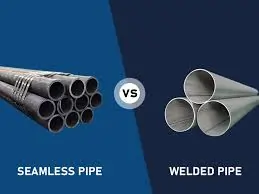
Seamless Steel vs Stainless Steel: Key Differences, Uses, and Benefits
Steel is one of the most important materials used in construction, manufacturing, and engineering. However, not all steel products are the same. Two commonly compared types are seamless steel and stainless steel. While both are widely used across industries, they serve different purposes and have distinct properties.
This article explains the differences between seamless steel and stainless steel, including their manufacturing processes, properties, applications, advantages, and limitations, helping you choose the right material for your project.
What Is Seamless Steel?
Seamless steel refers to steel pipes or tubes manufactured without a welded seam. Unlike welded steel pipes, seamless steel is produced by piercing a solid steel billet and forming it into a hollow tube. This results in a uniform structure with no weak points along a welded joint.
Manufacturing Process of Seamless Steel
-
Solid steel billets are heated
-
The billet is pierced to create a hollow center
-
The tube is rolled and stretched to achieve the desired diameter and thickness
-
Heat treatment and finishing are applied
Because there is no weld seam, seamless steel offers superior strength and pressure resistance.
What Is Stainless Steel?
Stainless steel is a type of steel alloy that contains a minimum of 10.5% chromium, which forms a protective oxide layer on the surface. This layer provides excellent corrosion resistance and gives stainless steel its characteristic shiny appearance.
Stainless steel can be produced in various forms, including pipes, sheets, plates, bars, and coils. It may be either welded or seamless, depending on how it is manufactured.
Common Stainless Steel Grades
-
304 and 304L
-
316 and 316L
-
410 and 430
-
Duplex stainless steels
Key Difference Between Seamless Steel and Stainless Steel
The most important distinction is that seamless steel describes a manufacturing method, while stainless steel describes a material composition.
-
Seamless steel can be carbon steel or alloy steel
-
Stainless steel refers to corrosion-resistant steel alloys
-
Stainless steel can also be seamless or welded
Understanding this difference is essential when selecting steel products.
Strength and Mechanical Performance
Seamless Steel Strength
Seamless steel pipes have:
-
Higher tensile strength
-
Better resistance to internal pressure
-
Uniform structure without weak weld points
They are ideal for high-pressure and high-temperature applications.
Stainless Steel Strength
Stainless steel offers:
-
Good tensile and yield strength
-
Excellent toughness
-
Strong performance at low and high temperatures
Some stainless alloys, such as duplex grades, provide extremely high strength.
Corrosion Resistance Comparison
Seamless Carbon Steel
Standard seamless carbon steel has limited corrosion resistance and may rust if not protected with coatings or linings.
Stainless Steel
Stainless steel excels in corrosion resistance due to its chromium content. It performs well in:
-
Moist environments
-
Chemical processing
-
Marine and coastal conditions
For corrosive environments, stainless steel is usually the better choice.
Heat and Pressure Resistance
Seamless steel is preferred for applications involving:
-
High pressure
-
High temperature
-
Steam and thermal systems
Stainless steel also performs well under heat, especially grades designed for elevated temperatures, such as austenitic stainless steels.
Applications of Seamless Steel
Seamless steel is commonly used in:
-
Oil and gas pipelines
-
Power plants and boilers
-
Hydraulic and mechanical tubing
-
Automotive components
-
High-pressure fluid systems
Its uniform structure makes it reliable for critical applications.
Applications of Stainless Steel
Stainless steel is widely used in:
-
Food and beverage processing
-
Medical and pharmaceutical equipment
-
Chemical plants
-
Marine applications
-
Architectural and decorative structures
Its corrosion resistance and hygiene properties make it ideal for clean and exposed environments.
Cost Comparison
Seamless Steel Cost
Seamless carbon steel is generally:
-
More affordable than stainless steel
-
Cost-effective for high-pressure systems
However, additional corrosion protection may increase total cost.
Stainless Steel Cost
Stainless steel is:
-
More expensive due to alloying elements like chromium and nickel
-
Cost-effective in long-term applications due to low maintenance
The higher initial cost is often offset by durability and reduced corrosion-related expenses.
Maintenance and Service Life
Seamless steel typically requires:
-
Coatings, painting, or linings
-
Regular inspection to prevent corrosion
Stainless steel requires:
-
Minimal maintenance
-
No additional protective coating in most environments
This makes stainless steel a preferred choice for long-term use.
Weldability and Fabrication
Seamless steel:
-
Is easy to machine
-
Requires careful welding techniques when joining
Stainless steel:
-
Offers good weldability (depending on grade)
-
Requires proper filler materials and techniques
Both materials can be fabricated effectively with correct procedures.
Environmental and Sustainability Considerations
Both seamless steel and stainless steel are:
-
Fully recyclable
-
Environmentally responsible when reused
Stainless steel has an advantage due to its longer service life and lower maintenance needs.
How to Choose Between Seamless Steel and Stainless Steel
Choose seamless steel if:
-
High pressure and strength are critical
-
The environment is non-corrosive
-
Cost efficiency is a priority
Choose stainless steel if:
-
Corrosion resistance is essential
-
Hygiene and cleanliness are required
-
Long service life is needed
Conclusion
The comparison of seamless steel vs stainless steel highlights that these materials serve different purposes rather than competing directly. Seamless steel excels in high-pressure and high-temperature applications due to its uniform structure, while stainless steel stands out for its exceptional corrosion resistance and durability.
By understanding their differences in composition, performance, cost, and application, engineers and buyers can select the most suitable material for their specific needs, ensuring safety, efficiency, and long-term value.